
Implant Questions, Answered
Everything You Want to Know
Honest answers to the questions we hear most about implants.
- Teeth in 24 hours
- Sedation available
- Aftercare support
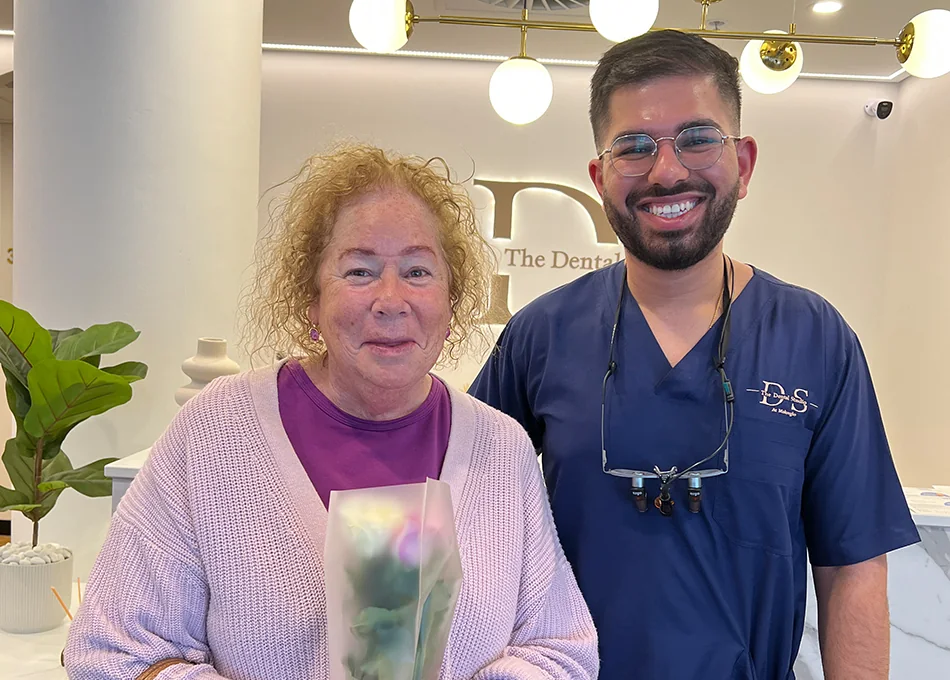
Dental Implant Questions, Answered
Choosing implants is a big decision, and most people arrive with a list of questions. Here are the ones we hear most. Bring the rest to your complimentary consultation.
Common Questions About Dental Implants
Dental implants are titanium posts surgically placed into the jawbone to act as a stable foundation for replacement teeth. They are one option to replace missing teeth. Suitability and outcomes vary.
With good home care and regular reviews, implants are designed to last for many years. Your dentist will show you exactly how to look after them.
The area is completely numbed before we begin, and oral sedation is available for suitable patients. You go home with clear aftercare instructions, and our team is only a phone call away.
Candidates for dental implants generally need healthy gums and sufficient bone density to support the implant. Our team will assess your oral health and medical history to determine your suitability during a comprehensive consultation.
The dental implant process varies depending on individual needs but typically takes a few months. This period includes the initial placement of the implant and the healing time needed for the implant to integrate with the jawbone before the final restoration.
Full arch patients go home with new teeth within 24 hours of surgery. Your final teeth are fitted once healing is complete.
A CBCT scan shows your jaw in 3D, including the nerves and sinuses, so every implant is planned precisely. It is taken right here in the studio.
Longer implants anchored into strong bone at the very back of the upper jaw. For many people told they do not have enough bone, they can mean fixed teeth without a sinus lift. See our Pterygoid Implants page.
Surgical guides, temporary teeth, models and trial smiles are 3D printed in our studio, which is how full arch patients receive their teeth within 24 hours.
Yes. Oral sedation is available for suitable patients, and Dr. Bhanu will talk you through it at your consultation.
Patients should brush at least twice a day using a soft-bristled toothbrush and low-abrasive toothpaste. Gentle circular motions help clean the implant surface and gums without scratching the titanium or irritating tissue.
Flossing once a day using implant-safe floss or a water flosser removes debris and plaque from hard-to-reach spaces. An antimicrobial mouth rinse can also support gum health and reduce bacteria buildup.
Soft manual or electric toothbrushes, rubber-tip stimulators, and implant-specific floss are helpful daily tools. Many people also use interdental brushes with nylon-coated wires that prevent scratching implant surfaces.
A low-pressure water flosser can replace or complement traditional flossing, particularly for patients with multiple implants. Each tool should be selected based on comfort and guidance from a dental professional.
About Our Implant Care
-
Comprehensive Care
We support you from consultation through to final restoration.
-
Imaging
We use X-rays and CBCT scans where clinically indicated.
-
Personalised Treatment Plans
Tailored to your dental health and goals.
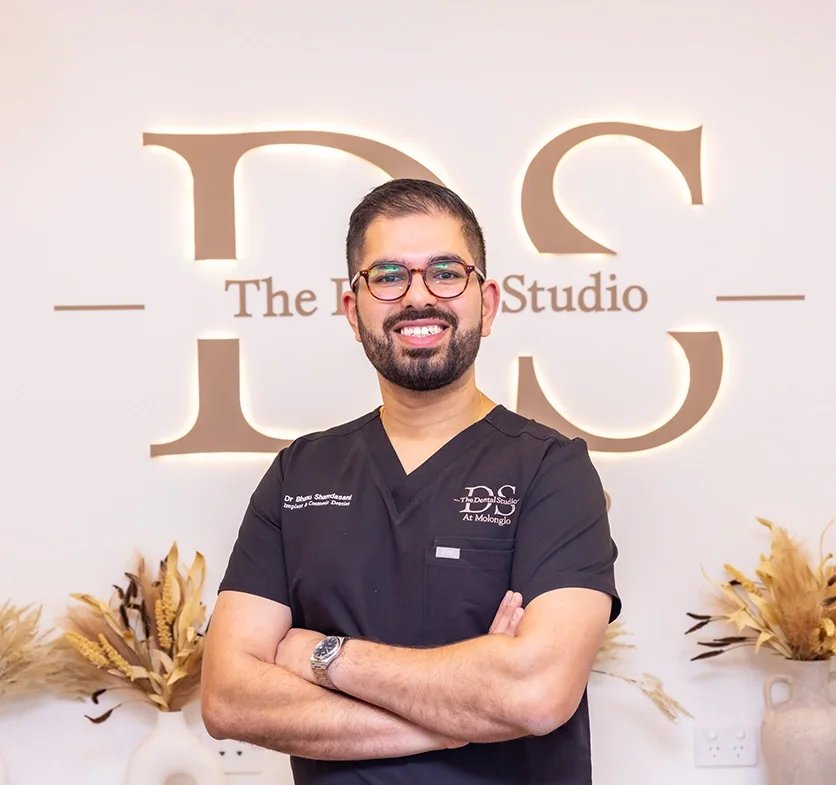
Meet Dr. Bhanu
Dr. Bhanu Shamdasani founded The Dental Studio in 2024. Implant dentistry is his passion, from single implants to full arch treatment and pterygoid implants, with more than 2,000 implants placed. He also loves creating beautiful smiles with veneers and clear aligners.
Dr. Bhanu Shamdasani, Dentist, General registration, AHPRA DEN0002585869. Bachelor of Health Sciences in Dentistry and Master of Dentistry, La Trobe University.
Begin With a Conversation
At The Dental Studio, we are happy to answer your questions. If you have more questions or are ready to explore dental implants, contact us to arrange a consultation.
We believe in complete transparency. All surgery can carry risks, and Dr. Bhanu will walk you through everything at your complimentary consultation. Read more about risks and recovery.